Murder Mystery Audiobook Bonding, Or Books that We All Can Agree On

As my previous post stated, the physical-page-turning reading has been plodding. I’d compare it to the pace I would complete the mile run fitness test in high school. (Best time: 18 minutes, entire class waiting on me to finish, annoyed.) But audiobooks have been a different story.

My husband and I have been tearing through audiobooks lately. And since we’re trying to solve a problem I imagine other couples have, I thought I’d log some 1. agreeable books and 2. lessons in compromise. These aren’t in-depth reviews by any stretch. They’re just quick notes on where lit-snot taste and beach-read taste intersect.

About Us

My husband is brilliant, and it was literature that originally sparked our mutual interest in one another. He’s read a good deal of classics, but he isn’t like me–he doesn’t consider them entertainment. I don’t blame him. His work days are pretty heavy, and I know that my way of unwinding (a little Notes from the Underground with my chardonnay) isn’t all that relaxing for most people. But now that he’s got an Audible subscription, I started having irresistible visions of cozy cabin nights snuggling while huddled up around our new best friend Alexa as she reads to us. So the hunt for mutually acceptable books began.

It was no easy task, since he wants something entertaining and I want something with brilliant language and well-developed characters and a unique plot and lots of themes and intrigue…well, you can clearly see which one of us is the problem here. Anyway, those things can intersect, but it’s hard to find the point where they do.

Since we both like TV crime dramas, I thought we’d go hunting in that arena. It’s not a bad bet: you know the kind of material you’re getting for the (ahem, exorbitant) price of an audiobook, whereas some of the other genres could produce totally unreadable material despite promises of glory (see my post on Gilead).

What We Read

The first book I thought maybe we should try was The Girl on the Train by Paula Hawkins, which had everyone talking over the last year or so. This book was popular for good reason–it was bit more “psychological portrait of an alcoholic” than “murder mystery,” but we spent the entire car ride from Chicago to Louisiana listening to it with neither of us ever feeling like it was time to stop. It was good ground for both, ground we were comfortable hiking around together, pointing out wildlife.

Mutual Agreeableness Scale: A


What was not good mutual ground was the next book I found. After seeing all the positive reviews on Goodreads (PRO TIP: do not get your recommendations from Goodreads unless you have a community there you trust), we bought The Kind Worth Killingwhich I imagine the author thought was a daring and clever book on moral ambiguity. I should have known just by the title it was going to be bad, and baaaaaaaad it was. Every character was completely absurd. The plot was a constant onslaught of gimmicks. But don’t worry–you will leave the book having a great deal of knowledge of the size, shape, texture, relative jiggle, etc. of the breasts of each female character. So if, while you’re getting to know the minds and histories of a character in a book you often find yourself thinking, “okay, that’s fine…but what is her cup size?” you’ll be quite satisfied with this book. Sorry, my feminism is showing. Anyway, if we hadn’t paid so damn much for the audiobook, I would have stopped after a few chapters. And it wasn’t like my husband was in love with it either, though he is more patient than me, in both literature and life. We spend a good amount of time talking about all its flaws, though, so it wasn’t like there was no bonding over it.

Mutual Agreeableness Scale: D (the only thing that keeps it from F is that is isn’t quite Dan Brown)


Being burned by this last stinker, I was a little jaded by the crime novel. But I reluctantly said that maybe we ought to see what all the Gone Girl hoopla was about. I am changed. This book was absolutely fantastic, and it was the perfect intersection of what we both like. The husband loves plot and suspense. I love language and characters. This book had all of it. It was just amazing, every step of the way. I might do a more through examination later because this makes my “literature worth discussing” list. And my husband laughed aloud several times and paused the audio at multiple points to talk about what was going on, which is remarkable. We both united in delight on this one.

Mutual Agreeableness Scale: A+++++++ (picture teacher from A Christmas Story)


We loved Gillian Flynn so much that we chose another of her books next. It’s called Sharp Objects. It was good, but it wasn’t Gone Girl. It was harder to follow, less entertaining, and had a much slower plot.  Nonetheless, Flynn is just a good author, period. It would be really hard with someone with such lyrical prose to pump out a subpar book, even if the plot isn’t stellar. But we agreed that there were some preposterously unrealistic drug scenes, and at least one of the characters was just not believable in the slightest–far too over the top. But it was not a wasted purchase. We devoured the book and both continue to say we’d read more from Flynn any day.

Mutual Agreeableness Scale: B+


Here’s the part where I beg for your help.

Anyone have any books they think would rank high on our mutual agreeableness scale? I’ve researched and researched, and it’s just so hard to find things with both the good lit and the entertainment angle. I’m trying hard to convince the husband that Franzen’s Purity isn’t Freedomwhich we audiobook-ed together a long time ago and he didn’t like. (Frankly, neither did I.) I’d love to experience Purity again. We’re also thinking of Find Herthough I’m a little sketched out by the Evanovich/Patterson-style serial detective thing. I just assume they’re trash, rightly or wrongly.

I’m not just fishing for comments–I’d really, really love recommendations. This is new territory to me. There’s nothing I love more than our audiobook nights and listening to something together, and I want to keep it going.


Gilead and the Hidden Sparklies

2005’s Pulitzer winner is Gilead, a novel from an author named Marilynne Robinson. Well, it’s more a letter than a novel. A old preacher knows he’s dying, and he’s begun to write to his young son. This book is his letter. A long, long letter.

This letter is filled with thoughts about life and sermons and writing and staying up late and the way water glistens in trees and how language isn’t really sufficient to describe the world. It’s sweet. Introspective. Solemn. The narrator is sad, but he finds such childlike wonder in the world around him. It should be a very nice book, very nice indeed. It’s like a muddy, lazy current running slowly over rocks, and if you’re patient and pan through all the modest, simple prose, you’ll find gold in your pan.

I love to see what it is that works about writing and what doesn’t, and I’ve usually got it down. But this one has utterly turned my head. If someone described it to me, I’d know instantly: Gilead is exactly the kind of novel I would love and everyone else would hate. It’s quiet, thoughtful, deep prodding. It’s full of inner life and psychology, and plot takes a backseat to character. This should be my book. This should be the book that I look at and say “It’s heartbreaking art, beautiful art, and no one will like it but me, and that’s okay.”

The exact opposite has happened. What is the holy alternate universe is going on?

I’ve been reading this one since January, and it’s just been a slog. I don’t care about what’s on the next page, and I never want to pick it up.  I finally said, “Okay, litero-universe. Redeem this book.” And redeem it did.

I looked up the New York Times book review.

Robinson’s words have a spiritual force that’s rare in contemporary fiction…’grace as a sort of ecstatic fire that takes things down to essentials.’

And

Gradually, Robinson’s novel teaches us how we might slow down to walk at its own processional pace, and how we might learn to coddle its many fine details.

Well, that makes me want to keep going.

Okay. On to Slate.

It is as spare, and as spiritual, a novel as I think I have ever encountered. Yet reading it is enough to inspire missionary fervor: You must read this book…What Robinson has written is, in fact, a mystery—not merely a spiritual meditation on the mystery of God’s grace, that “absolute disjunction between our Father’s love and our deserving,” as Ames phrases it at one point, but a literary, and a literal, mystery.

Woah. Okay.

So now here’s the president of the United States on it.

One of my favorite characters in fiction is a pastor in Gilead, Iowa, named John Ames, who is gracious and courtly and a little bit confused about how to reconcile his faith with all the various travails that his family goes through. And I was just—I just fell in love with the character, fell in love with the book,

That’s right, Obama adores this book.

When I read what people had to say about this book, my faith was renewed. There’s something here. Something glittering and golden was in this book, waiting to be discovered, if you just looked. I was going to go after it. I was going to understand the key that made this such a moving experience for everyone. And now, welp, I’m right back to not picking up the book.

Here’s the Struggle…

…and it’s a struggle every high school student that doesn’t want to read Hamlet will deal with. People say a certain book is worth something. People say I will be better if I read it, that it will enhance my experience of life somehow if I can look past my disinterest and really try to engage with it. There are gems to uncover.

Of course, teenage you is like, “naw!”

Great Expectations comes to mind. I read it my sophomore year and thought it a outrageous waste of my time.  But I gave it another go about 10 years later, and I just saw it, saw every moment of brilliance, saw every reason the book had lasted, all the archetypes it had laid out with such cleverness and–OH–the humor. Great Expectations absolutely cracked me up. I should have trusted everyone. It was full of as many treasures as they told me it would be. I just had to be open to it. And now I’m trying to take the lesson to heart.

I want to crack through the shell of this book and understand why people love it with the passion they do. I want to see the depths they see. But I  just don’t think Gilead is going to be my Great Expectations. When should I trust people enough to plug forward, trusting that I’ll find the reward they promise? I don’t know.

I think in situations like this, I’m scared I’m missing something. It isn’t insecurity, I don’t think. It’s the dreaded FOMO. I’m more wondering, “What if there’s some beautiful thing lying in this book that I just can’t get to? Maybe if I just tried harder,  I could unlock that treasure chest that everyone else found here.”

But I think I just have to accept that book-glitter is sometimes–not usually–but sometimes just something that’s in they eye of the beholder.

Anyway, if you want to check out Gileadbe my guest. I want to hear that someone real, not just a president someone or a book reviewer someone, found what I looked for and couldn’t find.

Anticipated Books of 2016

I was delighted to see an article from The Millions (which, if you don’t follow, you should) that focused on the most anticipated books of this year.

Here’s a link so you can view it in all its glory. Be warned–none of their links open in a new tab, and it will drive you batty.

Though I don’t think anything compares to 2015’s excitement over a new Franzen book, there’s some pretty fun things in the pipeline. For instance, you’ll perhaps remember a woman named Elizabeth Strout, especially if you paid attention to the Emmys last year. Her Pulitzer winner Olive Kitteridge was made into a TV series that fared well, and I wrote about the book a few months ago. (Spoiler alert: loved it.) Well, Strout had a new book come out just last week. It’s called My Name Is Lucy Barton, and it’s another family drama. That’s great, since that’s what Strout does best: family dynamics. An estranged daughter comes back to a sick mother. Hilarity ensues. Kidding, of course–if it’s anything like Olive Kitteridge, it will be probably be quite solemnand quite good.

–Added to cart.

Wait till you see Fine, Fine, Fine, FineI would get this one for the cover alone.
Capture

I’d never heard of this author before. Apparently she writes brilliant microstories. If short story authors are witches, authors who write super tiny stories are voodoo high priestesses.  These are supposed to be raw, funny, and written with great skill. The Millions name-dropped Viktor Shklovsky, who seems to be making the circuit of people who discuss the defamiliarization tactics of short story authors. (Well, by that, I mean I talked about it too.) The description on The Millions article is interesting, more interesting than what I’m saying here, so check it out. And the book’s out in a few days, so you can order it now.

—Added to cart mostly because of book cover.

There’s a book coming out in February called You Should Pity Us Instead It has a much less interesting cover, and it’s by another unknown-by-me author. But The Millions’ description of it is awesome:

A debut collection of crisp short stories about people in various forms of extremis — people with kidnapped sons, babies who won’t stop crying, too many cats. The scenarios vary wildly in terms of their objective badness, but that’s how life is, and the writer treats them all with gravity.

—Added to cart because too many cats.

But back to what the people really want. Awesome covers.

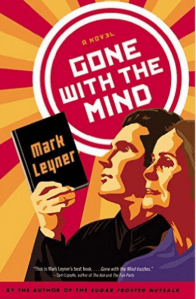
Here is Mark Leyner’s Gone With the Mind

Capturez

Fabulous.

Apparently, you don’t have to worry about misjudging a book by its interesting cover. The plot involves an autobiography reading at a Panda Express. I have to assume such a thing comes from a rare gem of a mind.

—Added to cart for soviet constructivist cover art.

There’s so much more, so check out that article.  More highlights include Sudden Death, Zero K, and Thomas Jefferson Dreams of Sally Hemings. (Definitely read the excerpt of that one. It’s wonderful.)

In other news, I am never writing a blog post on a tablet again. Sorry to anyone who clicked and saw a garble-tastic work in progress instead of a completed post. I also joined the affiliate link program on Amazon, knowing I’d be linking to a ton of things here, so full disclosure on that. Most links won’t make me anything, but the ones to books on Amazon will send a few cents my way if you decide to buy a book about too many cats.


March: Overview

51I8X5w-eeL._SX324_BO1,204,203,200_.jpgIf you were once a child and are female, someone probably gave you Little Women at some point. Whether you read it or not is another thing.

I read it. But I also read every word on cereal boxes as I crunched away at breakfast and was consequently the only eight-year-old to be familiar with terms like “butylated hydroxyanisole” and “red #40.”

I’m much more picky about my books (and my cereal) these days. It’s hard for me to remember Little Women, but if it’s anything like March, it was probably so-so, and it was certainly not Pulitzer-worthy. But let me explain.

Tl;dr Synopsis

“Tl;dr” is a pretty good summary of how you should approach this book. No, I’m sorry, it really isn’t that bad. I’ll get more objective for you.

Here’s some necessary background: Meg, Jo, Beth, Amy, and their mother Marmee were the heroes of the book Little Women, written by 19th century author Louisa May Alcott. Largely absent from the picture is the father’s experience. He went off to take part in the Civil War and returned when Beth fell ill.

March is meant to be an expansion on Little Women, telling the story of that father. It alternates between (a.) documenting his rather brutal and traumatizing experience as a radically abolitionist chaplain in the army and (b.) sharing background material from his younger years. It also includes letters to his wife, which describe mostly the changing of the seasons and the physical surroundings, pointedly leaving out the gruesomeness of the war. The book is written in the first person, from March’s point of view. Except when it switches to Marmee’s point of view, which happens near the end for a few chapters. Yep. Lots of narrative-technique fidgeting going on here.

Sorry, back to objective.

The main themes of the book are war and slavery, with a bit of family sprinkled in.

Writing Style

Here is where I have the most praise for the author. Mid-19th century literature is what I grew up reading (you know, when I wasn’t busy with nutrition labels), and the style of writing feels like home to me. Usually when a contemporary writer tries to mimic the tone of this time period, it’s groan-inducing. But Geraldine Brooks, author of March, did a splendid job of affecting the tone of an 1860s writer. She either grew up on the stuff too, or she did a great job studying the phrasing of the time period.

But tone isn’t exactly the same as language, though naturally word choice is essential to tone. The language surrounding the issue of slavery and race relations didn’t ring authentic. Even the most vehement of abolitionists of the Civil War era would have used different words than were used here. Now, that’s forgivable. No one wants their book to be taken out of context, and if Brooks had decided to be more true to the time, her book could easily be taken not as a period piece but instead as a offensive book written in the 2000s by an ignorant white lady. But I think the word choice here, while judicious, was the tip of the iceberg. There’s a problem with the novel that runs deeper.

Characters

The main character, the patriarch of the March family, is not believable. He can talk the 1860s talk, but he’s clearly a character plucked from 2007 and placed into the time period, modern (educated) sentiments about equality/race and all. It’s as if he’s lived in an absolute vacuum. The treatment of African Americans as “other” never ceases to astound him, even after seeing it over and over. It’s absurd.

Certainly, the nature of the cruelty shown toward an entire race would have shocked insulated people in the north at that time. But no one was going to be surprised that slaves were treated differently than white people. I mean, it’s the sad truth that you can’t even expect that African Americans will be treated with equality today, except for in the most progressive circles.

I don’t want to go into it too much, but feel free to read yourself and see what you think. March expresses ideas that are totally not in keeping with the time, all while being continually shocked when people didn’t feel the same or couldn’t see what he saw. It just isn’t accurate. More than that, it isn’t imaginative to just take what any civilized, modern-day person would think a turn it into the basis for the hero of a Civil War novel.


It’s not just him that’s the problem with Brooks’ character writing. She threw in Thoreau and Emerson, for reasons explained at the end: Alcott’s own family was close with the Thoreaus and Emersons. But these giants of American history seemed tossed in as an afterthought, having little to do with the actual book. These historical figures also seemed to be written in with the goal of making them come alive to the reader, and this intention (and not the coordinating desired result) comes through with every word. I can just imagine the author thinking “I am a fiction writer! I shall reveal to the reader not a crusty figure from a textbook but a person with flashing eyes (every amateur fiction writer’s favorite, along with “flowing tresses”) and quirky mannerisms!” ~Holds pen high above paper, descends with flourish.~

All right. I’m being very hard on this book. It wasn’t that bad. I finished it.

Highlights

I liked reading about Rev. March growing up. The first third or so of the book is the best part.

Though I wasn’t crazy about the Emerson and Thoreau characters, John Brown entered the story in an interesting way. I thought that character was pretty well written, and if you know the Little Women backstory about losing a fortune, this was a great integration with the plot.

Who Should Read the Book

If you’re a fan of British writing of this time period and you’re not quite as familiar with American history or don’t mind a little leeway with it, this isn’t a bad book. The writing style is true, and most people probably won’t have as much of an issue with the book as I did, since I know myself to be cantankerous and amazingly picky. Oh, and if you love Little Women, this is probably a great addition to your library. It will be fun for you to see how Brooks filled in some missing pieces.

For What It’s Worth (My Opinion)

The intention behind the book was good, and I’ve largely focused on my complaints. So here’s the positive stuff. I think it portrayed the attitude of most toward slaves and abolitionists quite accurately. It even threw in some of the more nuanced issues, such as why slave owners viewed reading and writing as dangerous. And it certainly portrayed the atrocities of war and slavery in a way that was accurate–upsettingly so. It’s just that March himself, you should know, isn’t really a reflection of the time. Not from what I’ve read, anyway.

I wouldn’t read anything else from Brooks, personally. I just can’t forgive the flaws in the book’s namesake character. The book wasn’t awful, but there are too many other things out there.

Sorry for the absence. I’ve got some more things in the pipeline, including a “looking forward to 2016 books” post, and, appropriately, a post on the pains of content creation.

The Road: Overview

Capture

Post-apocalyptic tales, zombie movies—even the Party Rock Anthem video—none of it is my thing.

Also, you know what’s not on my list of characteristics of good writing? Speaking in fragments, letting fly endless streams of invented portmanteaus, and showing signs of a deep, weirdly personal revulsion for the comma.

With The Road, it doesn’t matter. It doesn’t matter if I don’t really like stories like this. It doesn’t matter that McCarthy makes up all his own rules about the construction of an English sentence. That’s because The Road is above personal taste and grammar rules.

Tl;dr Synopsis

An unnamed father and young son are travelling by foot through a cold and barren landscape. At first, all you know is that the father doesn’t want to be seen, which seems a little paranoid, given the desolation. But soon, it becomes clear why they need to stay hidden and why they’re never safe in one spot for too long. In an event that’s never really described, the whole continent (and the whole world, the father assumes) has burned. The years after the disaster have required that the small population of remaining humans fight to survive. The struggle has brought out the worst in some.

The winters have become too harsh, and the father’s vague goal is to get him and his son south to a more sustainable climate. But what will they do once they get there? You share the feelings they must have: there’s an uneasy hope that maybe it will be some improbable paradise of safety. But you don’t want to think about that too much, since what certainly lies in wait is death, one way or another.

The Road chronicles a few months of this pair’s journey. Along the way, you experience all the moments of desperation and horror and soaring relief that accompanies them.

Writing Style

First off, know that McCarthy speaks in fragments. There is no careful crafting of complex sentences, no adherence to anything like rules. Words go on paper, and he’s done. But where as I felt like editing the bejeezus out of the last author I read like this (Junot Diaz), I think putting a hand on McCarthy’s prose would be a mortal sin. You do not touch this man’s writing. It would be like trying to add a vanishing point to a Picasso or something—sure, it would make more visual sense, but you’re messing with the inventiveness of the art.  McCarthy, despite disregarding the rules of written communication, communicates beautifully. His writing is never confusing or unclear, and it’s inventive. His unusual twists on standard English do him a great service, in fact. It’s difficult to make devices like simile and metaphor not sound cliche, no matter how inventive the actual comparisons are. But this syntactical defamiliarization throws the reader off-game enough for McCarthy to use these devices without fear.

No one will accuse him of being a man of too few words, though that’s not to say the writing is simplistic. If you like Hemingway’s style, you will love McCarthy. He never tells us what his pair of protagonists are feeling, only what they say, do, and think. You’re left to fill in the emotional blanks yourself, and boy, do you. You live inside the characters.

I think one of the most moving scenes is when the two finally come upon the ocean. They had been trying to get to the shore for weeks, and you almost feel as much anticipation as they do. For what, you don’t know. You’ve just been living in their bleak world with them, looking forward to anything different that might be awaiting them, starving for some kind of hope. When they come upon the ocean, it’s gray, not blue. The sea is “shifting heavily like a slowly heaving vat of slag and then the gray squall line of ash.” The father apologizes that the ocean is not blue. The boy says, “That’s okay.” Then he insists on going swimming, despite the cold. When he comes out, he’s weeping. When the father asks what’s wrong, the boy says nothing. End scene.

You don’t have to describe the emotions, the disappointment of it all. Just what McCarthy says is enough to rip your heart out. Adding any more would be a sin. It’s minimalism at its most perfect.

That’s McCarthy’s best skill, I think. As a reader, you’re extremely active in the story. He carefully places his blanks, never leaving out so much information that you’re frustrated, but always making you do the work of walking with his characters. I think that’s a kind of respect for your audience.

Characters

You’re very much thrown in medias res into the two character’s lives, so you must form a picture of who they are from what you see of them now, not who they have been. The boy and the man are very different, though you understand why. The man is jaded and always on guard. He is the boy’s protector, and he takes that role very seriously. That causes problems between him and the boy. The son is empathetic and is willing to take risks to make human connections with others. But since that will endanger him, the man overrules all his son’s overtures to make friends with the few people they encounter who may not be savages.

Both the man and the boy are characters you understand, and though the focus of the book appears to be on the journey, it’s largely about what the situation is doing to the characters and their dynamic with one another.

Highlights

I’m not going to give it away, but there’s one shining moment of delight and relief in this book where you can almost feel your whole body relax. Straits were dire, and all of a sudden, a miracle.

At the same time, you understand when McCarthy tells us the man hates the luck. The father had accepted death was coming, and he was looking forward to the relief it would bring. He could have finally rested. Now, it was clear he was meant to keep fighting, and it was almost painful to switch back into that mode.

So, yeah, I guess the highlight is kind of depressing. This is why I don’t really like doomsday scenario books. It’s worth the experience in this case, though.

Who Should Read this Book

A beach read this is not. (Unless you’re like me and like to read Beloved while sipping a daiquiri on a cruise.)

But you’ve got to read it, just to watch McCarthy work. It’s an amazing experience. You absolutely go with these characters on the journey, and it’s nearly impossible to put down.

But, I don’t know…if you’re particularly empathetic (which I am, for what it’s worth) or feeling low these days, you might want to pick the right time in your life to read it. No judgement if that time isn’t now. The book is heavy.

For What It’s Worth (A.K.A. My Opinion)

I’m shocked that I loved this. Like I said in the beginning, it does not have the makings of a book I would even finish. The minimalist prose and the bleak apoco-scape are not on my list of favorite things. But it’s a beautiful, haunting experience, and I give so much props to McCarthy for crafting such a thing. The Picasso reference wasn’t thrown out casually. I feel like this author is an artist.

I’ll tell you what else. Taking a hot shower and feeling your hair dry all fluffy, curling up under a down comforter, throwing a delightful spinach/goat cheese/raspberry vinaigrette salad into your face—none of it will ever feel as good as it does after you finish The Road. Every little luxury in my life I appreciate now as privilege. Considering the season, it might be an appropriate thing. I don’t know the last time I’ve been so thankful for what I have.

Some 2015 Awards Coming Out

Hey, party people.

This is nothing like the gushing I’m about to do about Cormack McCarthy’s masterfully-written The Road, which I tore through. No, this post will be a bit of fluff about the winners of some word-centred prizes that have been announced in the last few weeks.

Amazon’s Best Books of 2015

Not sure Amazon can be considered an authoritative source, but it’s got populist roots that can be food for thought. I’m not sure how influenced by sales their editors are, but it’s likely that they kept the books on their best sellers list in mind. That makes it unlike other prizes in that it isn’t a core of literary aesthetes dictating to us, through the wisdom that comes with their cultivated taste, what is best to read. (See David Hume’s “Of the Standard of Taste.” Actually, you know what, don’t bother. It’s garbage.)

Not that I’m against people with great taste telling me what to read. I’m not against anyone telling me what to read, really. Which is why I’m perfectly happy to check out Amazon’s. Here it is. Or, if you’re like me, you can hop straight to the fiction category.

Capture

Notes:

  1. Check out you, Purity. Lovely to see you.
  2. To see what effect Stieg Larson’s books have had on cover design, get an eyeful of all the covers in the lit and other categories (including Ta-Nehisi Coates’ Between the World and Me) and then check out this Google image search.
  3. This has just occurred to me after going on my Pulitzer adventure. Before doing this, many of the things I read were in the public domain (read: free). Reading modern books is expensive. I’ve probably spent close to $100 on books this year, as opposed the maybe $10 I usually spend.Totally worth it.

Oxford’s Word of the Year

It’s an emoticon. True story.

Capture

If it weren’t for the smile part, that pretty accurately represents the reaction the public has had to this choice. An emoticon? Cue hell-in-a-handbasket hysteria.

I personally could not care less that an emoticon won. I’d even give them this: emoticons are indeed words, the same way hieroglyphics are words. Structuralists everywhere will agre that the image acts as a signpost for meaning, just the way words do.

What I care about is how late to the game all the people at Oxford are. They’re like Stan’s dad from Southpark: so terrified of seeming uncool that they jump on all the things “kids nowadays are into.” If you were going to go the emoticon route, (1) you’re too late—like, years too late—and (2) I think you’ve got to go with one of the more cutting edge pictorials.  Facial expressions are already so integrated that they’re hardly fresh news. If you’re going for novel, I think you have to go with the octopus. I say that based on the documented evidence that it is my personal favorite.

Capture

Anyway. Ask anyone under the age of 30 what they think of the shortlisted Oxford nominee “on fleek,” and they will raise one (previously-referred-to-as-on-fleek) eyebrow and throw shade. Oh no. Is “throw shade” still cool? Well, either way, I suggest making the people at Oxford your last to consult on the matter.

2015 National Book Awards

Here’s a link to the winners, but be prepared for an onslaught of unwelcome noise. (Why do sites do that?)

Adam Johnson topped the list, with a book called Fortune Smiles, encased in this marvelously designed exterior:

Capture.PNG

Goodness. That is so fun that you almost forget he wrote the BRUTAL, NIGHTMARE-INDUCING, UNFINISHABLE The Orphan Master’s Son.

Lauren Groff’s Fates and Furies shows up on this list, as well as Amazon’s. Since it’s getting so much attention, here’s the New York Times‘ review and the reviews on Goodreads. If you pick it up, let me know what you think.

Ta-Nehisi Coates takes the non-fiction prize again. If non-fiction doesn’t make you feel like you suck at reading, I would check this out. I might check it out, considering that it comes recommended from far and wide.

Next!  The Road. I can’t wait to tell you about it. McCarthy is the antithesis of everything I love in literature, which makes it all the more interesting that I found The Road absolutely riveting. Stay tuned.

The Brief Wondrous Life of Oscar Wao: Overview

51wOaYkRSfL._SY344_BO1,204,203,200_I’ve got several bones to pick with Mr. Junot Diaz about the title of his 2008 Pulitzer winner.

1. A spoiler in the title? Really?

2. I’m not sure “wondrous” is the word I’d use. All things considered, “cursed” is more appropriate.

3. You need a comma. But more about that (and how I’m wrong while being technically right) in a bit.

Tl;dr Synopsis

Curse

Writing Style

No, just kidding. I’ll actually give you a Tl:dr.

Tl;dr Synopsis

This book is about much more than Oscar De Leon, though it begins with him and ends with him. Each chapter is a vignette that serves as a puzzle piece. Through it, the story of the De Leon family and their horrifying multigenerational battle with the Fuku come together.

The Fuku was a curse believed to be a brought upon the Dominican Republic by Trujillo, a fearsome (and historically real) dictator in the 20s, 30s, and 40s. And while the author is quick to point out when Dominicans are being superstitious, it’s hard to believe Oscar’s family is just dealing with a few decades of bad luck.

You don’t learn of the initial source-Fuku (“Poor Abelard,” indeed) until a good way into the book, but you’re so distracted by all the stories in between that it doesn’t matter. There’s the story of obese, awkward Oscar and the roommate who wants to help him get it together. There’s the story of Beli, who is easy to hate until you realize she’s perhaps the biggest victim of all. And then there’s Lola, who we find out at the end is the reason the book is written. It’s the narrator’s love for her that causes him to try to counteract the curse by writing down the De Leon story.

Writing Style

Diaz is somewhat difficult to read, though perhaps that’s a failing of mine. If you’ve ever tried to read a Zora Neale Hurston book and plow through the literary attempts to record speech patterns of southern black folks, you’ll have an idea of the difficulty I’m talking about. First, there’s tons of jargon (or, in this case, Spanish). Second, there’s very little concern for grammar or propriety. The Brief Wondrous Life of Oscar Wao is filled with fragments, comma splices, improper capitalization, and speech not offset by quotation marks. That’s why I said maybe it’s a failing of mine. That’s kind of the stuff I focus on for work, and it’s my fault if I can’t look past it. I mean, I looked at the title and didn’t process much except, “huh, wonder who let that missing comma slip by.” If I were Diaz’s editor, I would have spent a year on this book. But I think I may be in the wrong for that. There’s certainly places where his first-draft-feeling book could have benefited from some editing for the sake of clarity. But I have to realize some editor somewhere made a choice to consider these things part of Diaz’s (or the narrator’s, anyway) voice. At times like these, I wonder how to not let myself as a person get in the way of me blogging for others’ sake.

Anyway, I’d sum up the writing style as casual. There’s a lot of strong language and personality in the writing. Those who liked The Catcher in the Rye in high school will probably also like this book. The voices are similar, though the story is less narrator-centered. (And this story is much better than bratty Caulfield’s.) However, if the thing you liked about The Catcher in the Rye was that it’s short, well, this isn’t for you–Oscar is pretty epic.

Also, be prepared to have you current knowledge of Spanish be taken to the next level. You will be able to, ahem, express yourself more fully once you’re done with this one.

Characters

The narrator is the best character, especially when you find out who he is. He’s got a distinct voice, but it doesn’t take you out of the story when he tells you what other characters are thinking and feeling. I think it’s to be understood that the narrator is taking a stab at what they’re going through, but Diaz does a good job of never making you feel confused about perspective. There aren’t constant reminders that your narrator is unreliable, and he so seldom inserts himself into the plot that it’s pretty easy to get lost in the story without being jarred out of it.

Oscar is a morose perpetual virgin who loves games and comic books and science fiction. He is an irredeemable dork, and not in the ironic, hipster way. His life is a major part of the book, but the book is about many others, as well. Lola is his headstrong, beautiful sister who’s there for Oscar whenever she’s needed. Beli is his wretch of a mother, so commanding and so scarred, both literally and psychologically. Yunior is his roommate, who tries and fails to encourage Oscar to be healthy and/or cool. When he fails, Yunior writes him off for as long as he can, but there’s something about Oscar won’t let Yunior’s forget about him. There’s a strong-willed grandmother, a great uncle who struggles to keep his family from the reach of Trujillo, and lots more. They are easy to read about, and they’re believable, though I don’t really find anyone remarkable. Maybe that’s a good thing. We do see how the different characters evolve, but this book is story-driven, not character driven,

Highlights

I really loved the chapter about Oscar and his roommate. I also really loved the ending. It was clear that the book was building to something with Oscar, and when it happened, it seemed right. It made sense. By the way, “it” is him dying. Normally I’d feel bad about telling you that, but, again, the title is a spoiler.

At the time, I was a little annoyed when it kept going after the closure we got with Oscar. it felt a bit like that last Lord of the Rings movie, just fading from one closing scene to the next, ad-seeming-infinitum. But now that I’ve gotten to the very end, I know exactly why it was there. It’s awesome.

Who Should Read this Book

I think that if you like historical fiction, interesting cultural pieces, or, again, The Catcher in the Rye, you will dig this book. It was a good story, and many times, it was a page-turner. It was also quite raw. Oscar is whatever the polar opposite of poetry is. If you like elegant prose or you’re squeamish about vulgarity, this probably isn’t your jam.

For What It’s Worth (A.K.A. My Opinion)

I can see why this won the prize. It’s a fascinating glimpse into Dominican culture and some of the awful things that happened there. In a lot of ways, this book deals with human rights violations, and I appreciate the light that it sheds. Junot Diaz is in the news a lot lately after criticizing the actions of Dominican Republic’s government, with the blowback of being stripped of awards back home. He’s an active advocate for the disenfranchised, and that shows in Oscar.

While I’m not squeamish (see above) or addicted to Victorian-style pomp and circumstance in language (see also above), this wasn’t my favorite. I respect it; I even like it. But it didn’t capture me quite the way other books have. I probably wouldn’t read something of Diaz’s again unless it was strongly recommended to me. I have too many other possible reads and only one life in which to read them. But this will be some people’s favorite book, and I understand why. To each his/her own.

Unrelated: Shameless Self-Promotion

Hey, all. A happy announcement! I’m officially self-employed. That puts so many important things in my grasp: location independence, the ability to pursue work that best uses my skills, and, importantly, the ability to Christmas shop while nine-to-five-ers are at work. (Just kidding, of course. As a member of this pleasantly civilized world where crowds are avoidable, I will be doing all my shopping on the internet.)

Wait until the cats find out how many road trips they’re about to go on. They will be thrilled.

You may have noticed that some of the tabs on the top of my blog have been changing. That’s in preparation for this move to full-time contracting.

So here’s a bit about me, if you’re not familiar. I’m primarily an editor by trade, but I’m doing writing and design work, too. My real dream is a kind of intersection of this blog and my editing skills—I love to study what makes writing powerful, and I’d like to apply what I’ve learned to people’s writing. In other words, I’m a decent writing coach, and I’d like to do more to help people develop skills that will put their writing game at the next level.

So what does this have to do with you? Well, if you or anyone you know have need for anyone with the skills I’ve talked about here, please check out my offerings/credentials on the tabs above and reach out to me at muledyaj at gmail dot com.

Also, please send soothing thoughts to the cats, who have no idea how many road trips they’re about to go on.

Scared-Cat-Photos_1

Purity: A Quick Note From Captain Obvious

This will be short.

Hamlet. Andreas. Go.

hamletWhat Franzen is doing with Hamlet is pretty smack-you-in-the-face, if you’re looking for it. So I’m not going to go into too much detail. I’m just here let you know to look for it.

If you remember anything from high school English, then you’ll be alarmed that Andreas and his mother’s biggest point of bonding is Hamlet. That’s what I mean about smack-you-in-the-face. But if you don’t remember Hamlet, it’s worth knowing a few things as you read Purity:

  1. Hamlet likes his mom. I mean, he really likes his mom.
  2. His dad is a ghost.
  3. What defines Hamlet’s life is his relationship with murder.
  4. He destroys the girl he loves–but does he love her? Can he love her, being as self-absorbed as he is?

The parallels aren’t perfect, but they’re there, and they’re fun and easy to find. If you are new to looking at literature for themes and uncovering hidden mysteries within a book, this is a enjoyable softball lobbed your way.

So if Purity‘s on your list, take your knowledge of Hamlet (and if it’s just the SparkNotes you scanned, good enough), and look at Andreas’ life when you read Purity.

To Level Up…

Now, if you really want to do a psychoanalytic criticism of Purity, get a basic grasp of Freud and read this thing. Oh boy. Pretty sure Franzen himself was reading a lot of Freud as he wrote this. Some of the most powerful phrases in the book come more from the mouth of Freud than Franzen.

But looking at the book on this level, if you’re a psych newbie, will take a bit more dedication. Freud has a pretty impressive body of work. Hamlet, on the other hand, is just, well, Hamlet.

***

Hey, here’s a fun fact! T.S. Eliot, writer of “The Wasteland,” “The Love Song of J. Alfred Prufrock” (my favorite poem), and the collection of poems that would inspire the musical Cats (yes, google it), thought Hamlet was awful and Shakespeare was a total literary mess when he wrote it. The more you know…

Purity: The Trouble with Gender

Here I am, just hanging out on the internet, about to be the four-billionth person here to talk about how Franzen is white and male. But I hope to avoid polemics-as-usual and be sensitive while remaining true to feminist roots.

The Criticism

Franzen’s biggest critics are women, and one of his biggest criticisms is his need to check that male privilege/mansplaining at the door:

Article 1: “Awwww, poor victimized famous bestselling author Jonathan Franzen!”

Article 2:  “The charge of misogyny, like the charge of racism, is a serious one, and I shy away from making it. But …Franzen continues to indict himself with gender theorizing that panders to the worst instincts of the male intellectual.” “Franzen can do better.”

Article 3 (and this is both legit AND hilarious): “He sounds like he’s just observing the patriarchal dictate that before we can talk about any woman artist or intellectual or politician or activist, we must first rank her on Hot or Not.”

Article 4 (by Roxane Gay, one of my favorite people. Follow her on Twitter; she’s a blast.): “He is offering up an earnest, albeit rather narrow and privileged assessment of the world we live in,” noting that, in Franzen’s world, feminism equals “angry womenfolk.”

Criticism Justified?

Oh, totally. Something you’ll see over and over in these articles is a reference to the part in Purity where the radically feminist (and radically unhinged) Anabel miserably guilts Tom into only peeing sitting down because the expression of inequality–standing up to pee–hurts her. You’ll also see that the extremist, separatist feminists that grab ahold of Annagret are not unlike the German Stasi in the book. They’re a totalitarian, police-like force of harpies. Franzen puts feminist in his books, and they are all life-crushing shrews.

Also to be noted is the phallocentrism of Purity, which is probably my biggest complaint about the book. You can look forward to hearing alllllll about the state of every male character’s penis, allllll the time. Is it disappointingly at half mast? Is it a throbbing beast ready to bust a hole in space time? Is it tentatively pushing on something, asking permission? Don’t worry. You’ll get to hear all about it. ALL. ABOUT. IT. And I don’t mean to be prude, but it takes away from my experience of the book. I can’t imagine why Franzen’s brain is just a nonstop flow of “penispenispenispenis.” Why are all these characters so obsessed with the state of their genitalia? Why is Franzen so obsessed?

But then, here’s where my sympathy may set me apart from the rest of the angry readers. I can’t imagine what it’s like to be in Franzen’s head, and I accept that this phallocentrism is his thing and it’s not mine. My experience has made me who I am, and he’s been shaped the same way.

For instance, if I wrote fiction, my real-life experiences with men would no doubt show up via my male characters, and considering that feelings I’ve taken away from many of those experiences, that might draw accusations of misandry from critics. (You know, the myriad of critics who would read my best-selling book.) I personally wouldn’t feel that assessment justified, but there would likely be evidence for that argument from my writing.

Going back to Franzen…yes, there is evidence of male-centric, anti-feminist, super-privileged writing here. Some of the articles I linked objectively point out these problems, which are worth noting. But others are outrage-seekers, trying to tear apart the overdog just because no one likes the overdog.

Take Article 1’s (above) comment. Let me put it in context. This is the paragraph before, quoting a fascinating Guardian interview with Franzen.

“In his Guardian interview, Franzen says that ‘I’m not a sexist. I am not somebody who goes around saying men are superior, or that male writers are superior. In fact, I really go out of my way to champion women’s work that I think is not getting enough attention. None of that is ever enough. Because a villain is needed. It’s like there’s no way to make myself not male. And one of the running jokes in the Tom and Anabel section [of ‘Purity.’] is that he’s really trying to not be male…. There’s a sense that there is really nothing I can do except die – or, I suppose, retire and never write again.’

Awwww, poor victimized famous bestselling author Jonathan Franzen! Why are feminists so meaaaaaan?

I understand where the sarcasm and lack of sympathy comes from here. But I don’t lack that sympathy.

Franzen’s a human being. He’s trying to write stories about how human beings hurt each other and make each other’s lives worth living. I don’t think he’s on a woman-hating mission. I think he’s expressing a lot of himself through Tom, who really wants to be a good feminist and just can’t do it without decoupling himself from crippling guilt, so he’s just given up. And wouldn’t you, if the idea of male privilege had seeped into your bones? If it seemed like the only thing you can do to be rid of this original sin is to never say anything again, lest your inherently poisoned point of view seeps through and victimizes all these people you’re unknowingly oppressing?

“There is No Way to Make Myself Not Male”

The subtitle of this Guardian interview is “there is no way to make myself not male,” and I think there’s an evolution of thinking behind it. I imagine that, once upon a time, he felt ashamed in realizing it, as if there was some essential thing wrong with him.

But now, I think Franzen is saying “there is no way to make myself not male” in a different way. He has been attacked for being male by critics for a long time, and sometimes with good reason. He’s made a couple of boneheaded PR moves (see comments on Edith Wharton). But I think he’s given up carrying that cross of guilt the way anyone with good intentions faced with constant attacks might.

I say he has good intentions because I think he portrays all characters, both male and female, with incredible empathy and nuance. I think Franzen isn’t lying in that Guardian interview when he says he loves people. And if you love people and are constantly attacked as a hate-filled bigot, well, I think there’s good reason to be bitter about it.

As for me, I see the male-centrism, but I like his books too much to think he should be silent. Though I do hope he’ll keep the state-of-the-phallus alerts to a minimum next time.